



Best Study Bibles: How to Choose One, Plus Companions for Deeper Study
Quick answer
A study Bible is a complete Bible with built-in notes, introductions, maps and cross-references that explain history and context. The best one for you depends mainly on translation and purpose. Many readers pair a study Bible with a journal Bible, like The Gospel of John Journal Bible, for personal notes.
What is a study Bible?
A study Bible prints the full biblical text with extra material written by scholars: book introductions covering authorship and background, verse-by-verse notes, cross-references, maps, charts and often essays. It is a reference tool designed to help you understand what a passage meant in its original setting.
Note that Protestant, Catholic and Orthodox Bibles differ in which books they include (66 in most Protestant Bibles, 73 in Catholic Bibles, more in many Orthodox Bibles), so check that a study Bible matches your tradition.
Well-known study Bibles to compare
Many study Bibles are tied to a single translation. Widely used examples include:
- ESV Study Bible (Crossway), based on the English Standard Version.
- NIV Study Bible (Zondervan), based on the New International Version.
- CSB Study Bible (Holman), based on the Christian Standard Bible.
- NLT Study Bible (Tyndale), based on the New Living Translation.
- The New Oxford Annotated Bible (Oxford University Press), an academic study Bible using the NRSV family of translations.
Compare a sample passage in each before buying; the notes, tone and layout vary considerably.
How to choose a study Bible
- Translation first: pick a translation you can read comfortably for long stretches.
- Purpose: devotional reading, teaching, or academic study call for different note styles.
- Perspective: notes reflect the editors' theological tradition; read the introduction to see whose they are.
- Size: study Bibles are often large; consider where you will read.
Companions to a study Bible
A study Bible is great for looking things up, but its dense pages leave little room to write. Many readers keep a lighter journal Bible or illustrated book of the Bible for daily reading and notes, and return to the study Bible when questions come up. As the Psalmist says, "Thy word is a lamp unto my feet, and a light unto my path" (Psalm 119:105, KJV).

Our pick
The Gospel of John Journal Bible
The full Gospel of John with dotted-grid margins for notes and prayers, a 2-in-1 Bible and journal beside your study Bible.
Shop now
Our pick
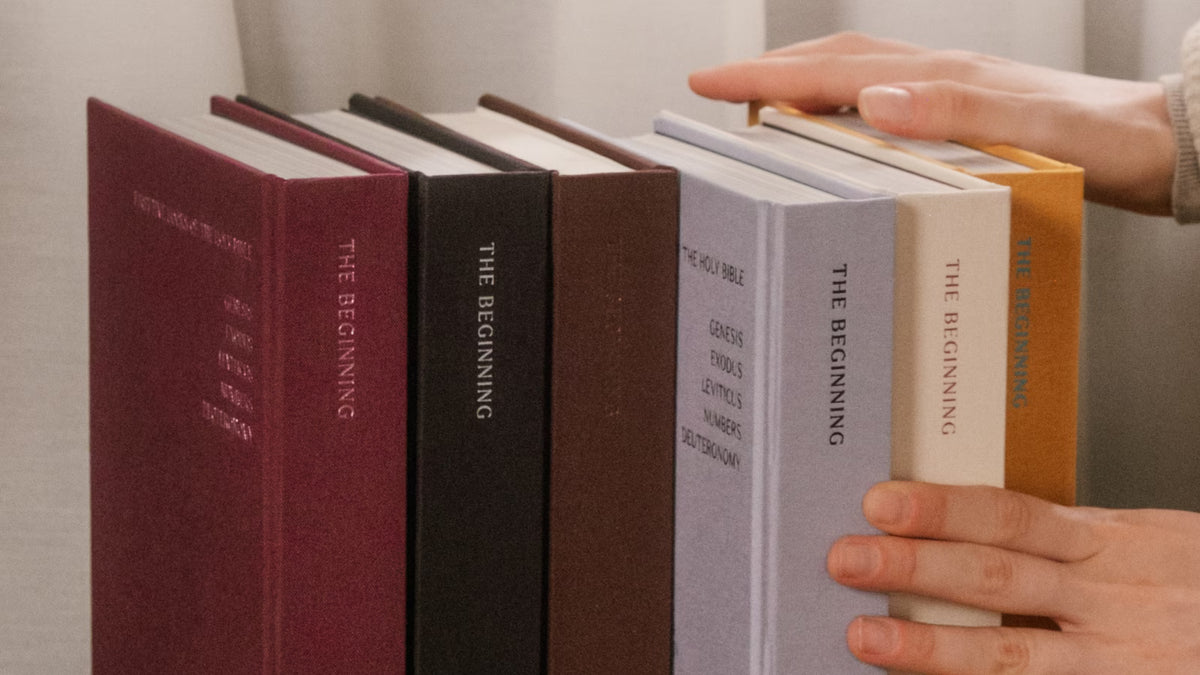
Journal Bible Complete Collection
Six Journal Bible books in one set, giving you room to write as you work through more of Scripture.
Shop now
Our pick
The Good and Beautiful Bible Study, Volume 1
A guided Bible study with readings, reflections, curated art and prayer, for structure alongside your reference notes.
Shop nowKeep reading: Best Bible study books · Best Bible translation · How to study the Bible for beginners.
Frequently asked questions
What is the difference between a study Bible and a regular Bible?
Both contain the full biblical text. A study Bible adds explanatory notes, introductions, maps and cross-references to help with context and interpretation.
Which translation should my study Bible use?
Choose a translation you understand and will read regularly. Word-for-word translations suit close study, while thought-for-thought translations are easier for long reading.
Are study Bible notes inspired Scripture?
No. The notes are written by scholars and reflect their research and tradition. They are helpful aids but should be read as commentary, not as the biblical text.

